01
What a fuel system does
A fuel delivery system connects the fuel tank to the engine. Its job is to supply the amount of fuel the engine needs across idle, cruising, and acceleration, while keeping that supply consistent and clean.
In modern vehicles this is a coordinated system. Mechanical parts move and filter fuel, while electronic controls decide how much fuel reaches each cylinder.
02
The path fuel travels
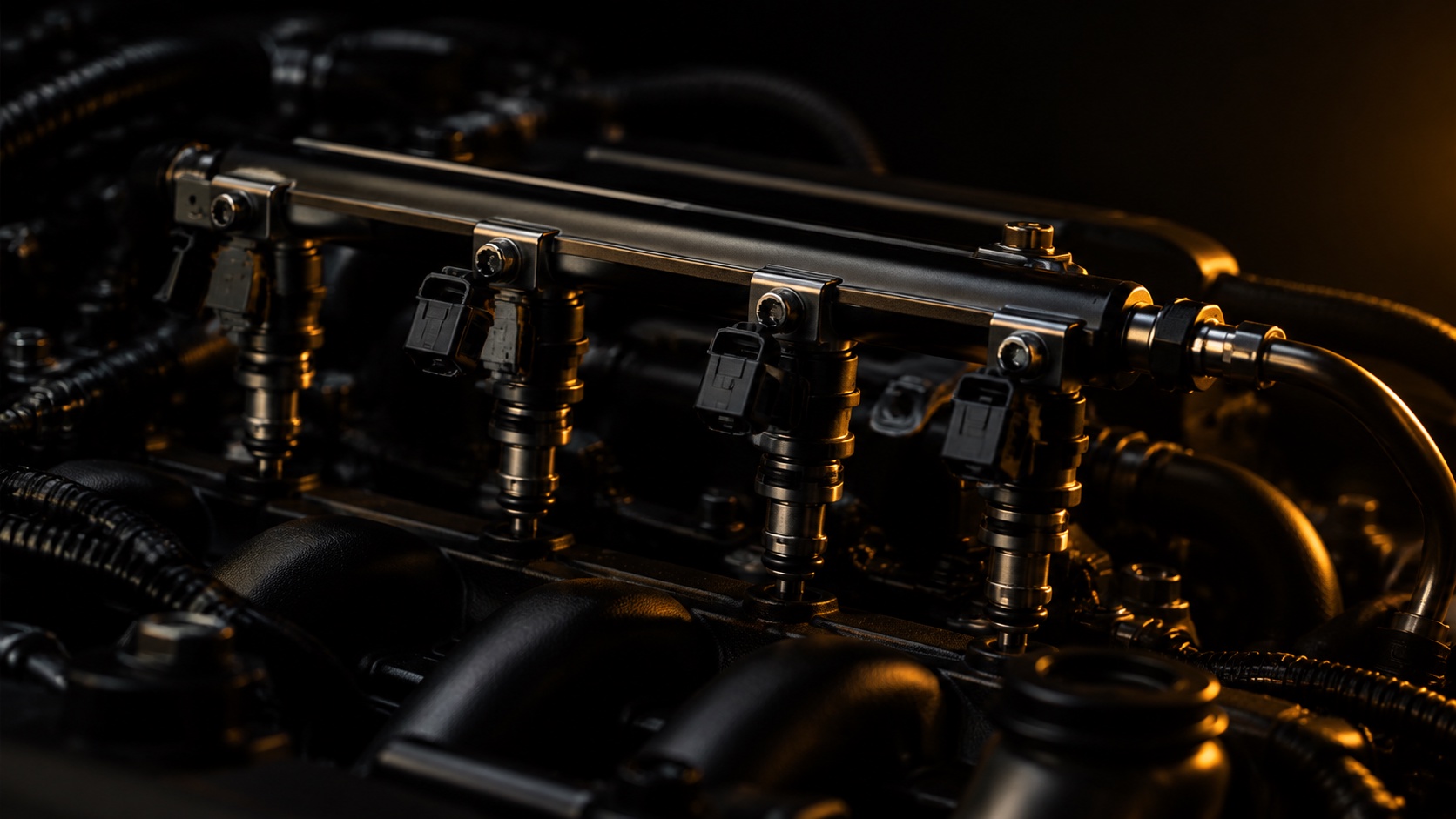
Fuel begins in the tank, where a pump draws it in and pushes it forward. It passes through a filter, travels through fuel lines to a fuel rail, and is finally metered into the engine by fuel injectors.
Along the way, a pressure regulator or an electronically controlled pump keeps pressure within a target range so the injectors can deliver accurate amounts.
03
Why it matters for vehicle operation
Combustion depends on a balanced mixture of air and fuel. Too little fuel and an engine can hesitate. Too much and efficiency drops. The fuel system is one half of that balance, working alongside the air intake and ignition systems.
04
Core terminology
Fuel rail: a manifold that distributes fuel to each injector. Fuel pressure: the force with which fuel is held in the system, often expressed in psi or bar. Returnless system: a design that regulates pressure without sending excess fuel back to the tank. Duty cycle: the share of time an injector spends open.
Keep exploring
Get fuel system explanations by text, if you choose.